Sustainability in Chile
4 June, 2025 - Anna Baum
Sustainability is a popular topic of conversation for Anna Baum in her job supporting grape growers and wine producers in the Clare Valley. So, when she was awarded a Great Wine Capitals Outbound Knowledge Exchange bursary, it was no surprise that she chose to explore this topic.
The Chilean wine industry has earned international recognition for its commitment to environmentally responsible and socially conscious’ wine production (1). So, a visit to Valparaiso – Casablanca Valley, Chile’s great wine capital, was an obvious choice for a knowledge exchange.
The visit did not coincide with a well-known event or a research conference. Rather, the itinerary was developed from late-night desk-top research and numerous emails, kindly translated into Spanish by Chat GPT. What resulted was an organic, grassroots, exchange of knowledge.
The sustainability code of the Chilean wine sector
Anna began the trip in Santiago visiting the offices of the Wines of Chile, the national wine industry association, to discuss The Sustainability Code. Social and environmental sustainability are key attributes of Chile’s national wine brand. She wanted to understand why global markets considered Chile a frontrunner and what it was about their sustainability credentials that secured market access.
Chile’s sustainability code – Certified sustainable.cl Wine of Chile – is nothing but comprehensive, scoring highly in international benchmarking studies (2). Wines of Chile is a pioneer of wine sustainability certification, developing the program in 2011. Anna’s discussions with head of research Claudia Carbonell highlighted the impact that certifying the industry’s social, environmental, and governance credentials has had on wine export markets.
Carbonell is particularly proud that social responsibility was included in the code from the beginning. She says Chile’s main export markets demand a lot of information regarding the social area, particularly from the Nordic countries.
Anna headed to the Casablanca Valley in the Valparaiso region to investigate how vineyards and wineries demonstrated social responsibility. Sustainability manager Sebastian Tramon at Emiliana Organic Vineyards, the largest organic, biodynamic and regenerative vineyard in the world, provided real insight into how the company approaches its social responsibility.
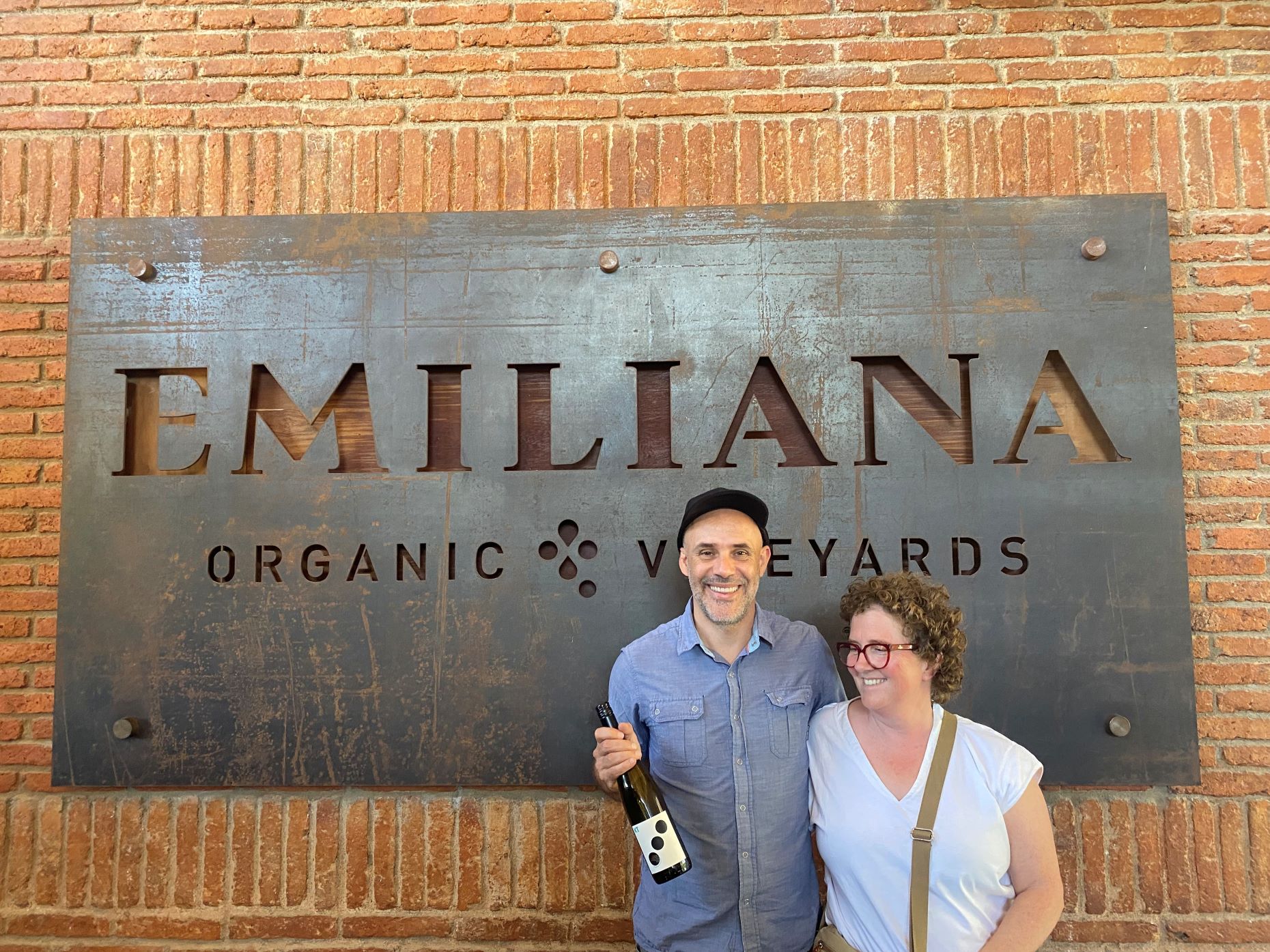
Emiliana Organic Vineyards claims to be the largest organic, biodynamic, and regenerative certified vineyards, according to sustainability manager Sebastian Tramon.
Emiliana not only supports workers professional and technical development and ensures workers’ rights and safety, but it also looks after the well-being and quality of life of its workers and their families. For example, they provide complementary health insurance and financial education for workers and technical scholarships for children of workers. We visited the staff vegetable garden at Emiliana which supplies workers and their families with fruit and vegetables.
Emiliana also supports the development of the local communities. In Casablanca, Emiliana has built a community centre and sports ground, and it also supplies the community with water when its well runs dry. Social responsibility also includes social initiatives with both suppliers and customers, including a sustainable supply program and a new responsible consumer program ‘Moderation Tastes Better’ (3).
Mitigating climate change
The impacts of climate change are wide-reaching in Casablanca Valley. It is the only wine region in Chile which relies solely on underground water and a decade-long drought has resulted in significant water scarcity for both the wine industry and local communities.
In response to this situation, the Association of Wine Entrepreneurs of the Casablanca Valley (AWECV) has been proactive in leading the establishment of a regional Clean Production Agreement, collaborating with local and federal Government and universities, to address adaptation and mitigation to climate change. AWECV director Jose Miguel Arnaiz met to discuss its sustainability goals, including improving water use efficiency by 5%, increasing energy efficiency by 5%, soil conservation, biodiversity protection, and improving community engagement and workplace quality of life.
Organics and Regenerative Agriculture
The prevalence of organics in Chilean viticulture has led to improved sustainability indicators such as reduced use of chemicals and increased biodiversity. It has also led to sustainability challenges such as the reliance on cultivation. Regenerative ag practices including multispecies cover crops and permanent swards are being introduced to address this.
Sourcing seed in Chile for these multispecies mixes is difficult and seed from Australia has been imported to trial. The Valparaiso region is also home to CERES Centro (4), a research and innovation centre dedicated to sustainable agriculture and rural development. Anna met with two research scientists working with local farming communities to improve productivity through a soil restoration program. Gonzalo Avila leads an extension and adoption program and has developed a set of in-field measurements and an explanatory field guide.
Like our own EcoVineyards program, the team at CERES is kicking goals in increasing adoption of sustainable practices that improve soils health and increase functional biodiversity. Could there be opportunity for collaboration? Watch this space.
Sustainable Tourism
Sustainable tourism was introduced in 2020 as the fourth area in the sustainability code. Many of the tourism enterprises are run independently to the production businesses and have welcomed the opportunity to place a sustainability lens over this part of the business.
Several of the wineries Anna visited promoted sustainability to their visitors in various ways, including winery and vineyard tours which highlighted energy efficiency, sustainable farming practices, soil health and biodiversity conservation. Hosted bike, walking and horseback tours through the vineyards and neighbouring biodiversity areas celebrated the natural beauty and provided opportunities to see local flora and fauna.
At Bodegas RE, behind-the-scenes winery tours revealed a story of rebirth and reinvention, using old fashioned ways to promote cooling, negating the need for refrigeration and air conditioning. It’s a fantastic story of using traditional design, clever ventilation, old production traditions, enhancing shade and partially burying the winery to reduce energy needs and create the perfect environment for making wine.
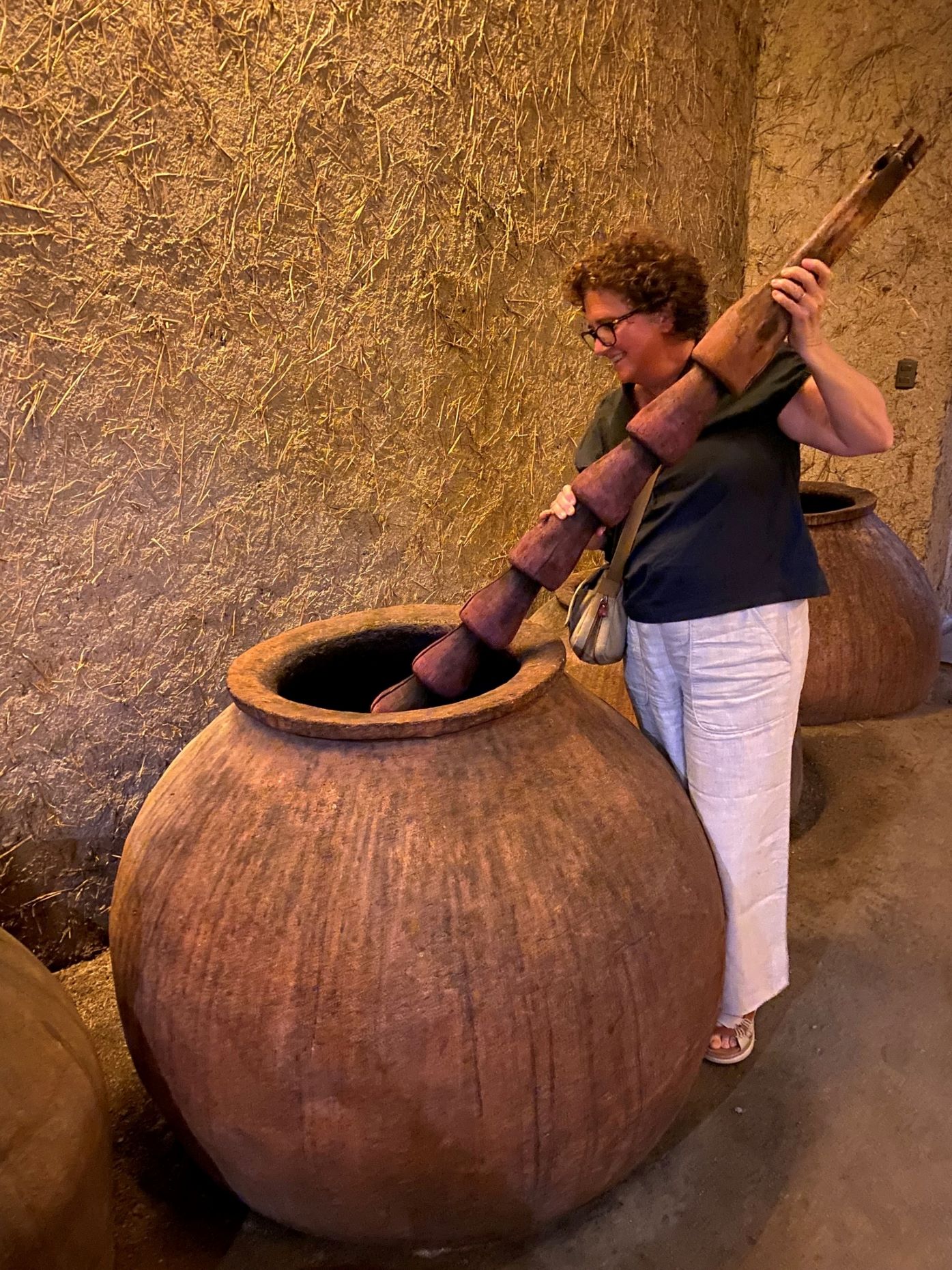 Traditional methods of producing wines at Bodegas RE have resulted in energy efficiencies
which negate the need for refrigeration and air conditioning in the winery.
In contrast, Kingston Family Vineyards story embraces innovative architectural design, efficient direct to consumer logistics, and modern technology in its production processes to address sustainability. For example, it aims to conserve water and energy use through solar powering its vineyard irrigation, recycling winery wastewater and recently introducing a reverse osmosis system to reuse clean wastewater in the winery cooling fermenters. It has also produced a pocket guide of flora and fauna found in the vineyard and conducts cooking classes using local produce.
Each winery has its unique sustainability story encouraging visitors to buy into its journey. Whether it’s simply recycling rubbish, eating food in a winery restaurant which is grown organically on the property, participating in biodiversity enhancement projects or knowing the money they spend goes towards supporting the local community, the consumer is made to feel like they are helping to halt climate change, regenerate the environment and rebuild the social fabric of the region.
Anna was supported by the Great Wine Capitals Outbound Knowledge Exchange bursary program.
Photos: Anna Baum.
1 Gabriela Cabezas Published Jul 28, 2023, www.tridge.com.
2 Intertek Sustainable Alcoholic and Non-Alcoholic Beverages Certification Benchmark Study Sep 2023
3 The Future is Organic, A Sustainable Strategy for a Better Planet, Emiliana
4 CERES Centro, www.centroceres.cl