Sheep grazing in vineyards
29 May, 2025 - Fil Farina
First planted in 1851, Hawkes Bay is New Zealand’s second oldest wine region and second largest. A new Great Wine Capital of the world (named in 2023) Hawkes Bay is an area of organic grape production, specialising in the use of sheep grazing and management within vineyards, a process carried out for over 30 years within these region’s vineyards.
The aim of this trip to Hawkes Bay, NZ was to determine the effect of sheep grazing on soil ecosystems, considering nutrient cycling and any possible carbon sequestration and storage. Traditionally vineyards are grazed within Australia for a few main purposes. Weed and grass management (instead of using herbicides) and as a safer haven for lambing compared to a more weather exposed lambing paddock.
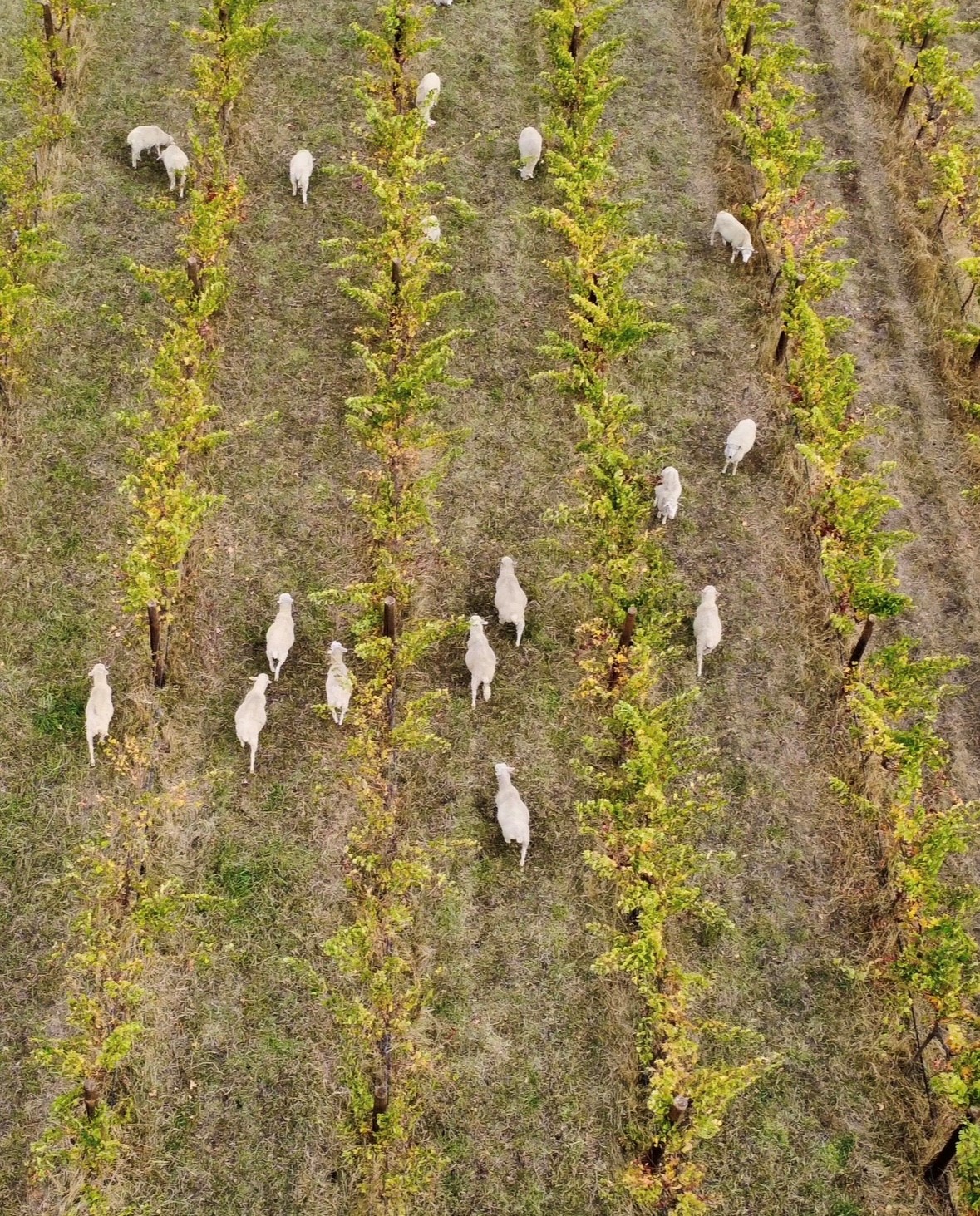
Sheep grazing within a vineyard around harvest. Grasses and grape leaves provide a very high source of nutrients for sheep.
Long periods of grazing within vineyards leads to problems such as soil compaction, non-preferential grazing of weeds/grasses and nutrient buildup created by sheep staying within the one area. Although the whole vineyard area is being grazed there are no times of rest for grasses and weeds to regrow. A rotational grazing method, where the area is grazed for say 7 to 10 days, then followed by a time of rest, does help to buffer the above issues. Further to this, a regenerative rotational grazing method where a shorter grazing period is allowed, while carrying a very high density of sheep, such as grazed for 2 to 3 days, with a rest period of 20 to 30 days can also be used.
Nutrient cycling within the vineyard is also of importance. What is nutrient cycling? This occurs as animals and plants consume nutrients found in the soil, and these nutrients are then released back into the environment.
From my travels and data shown to me, a regenerative rotational grazing method achieved higher grass production along with higher topsoil carbon storage than conventional grazing.
Cover cropping (planting and managing multi-species plants) also play an important role within vineyards for both nutrient management and sheep grazing. Correct management means cover crops can easily contribute to increasing soil carbon and its sequestration, along with providing smarter grazing options.
Cover crops within a traditional Australian vineyard are typically terminated via mechanical mowing, with plant biomass left on the soil surface to somewhat limit water and nutrient losses. Smart sheep grazing will successfully limit the potential of these losses, while increasing plant root mass, reducing herbicide usage, and decreasing the environmental footprint from wine grape growing.
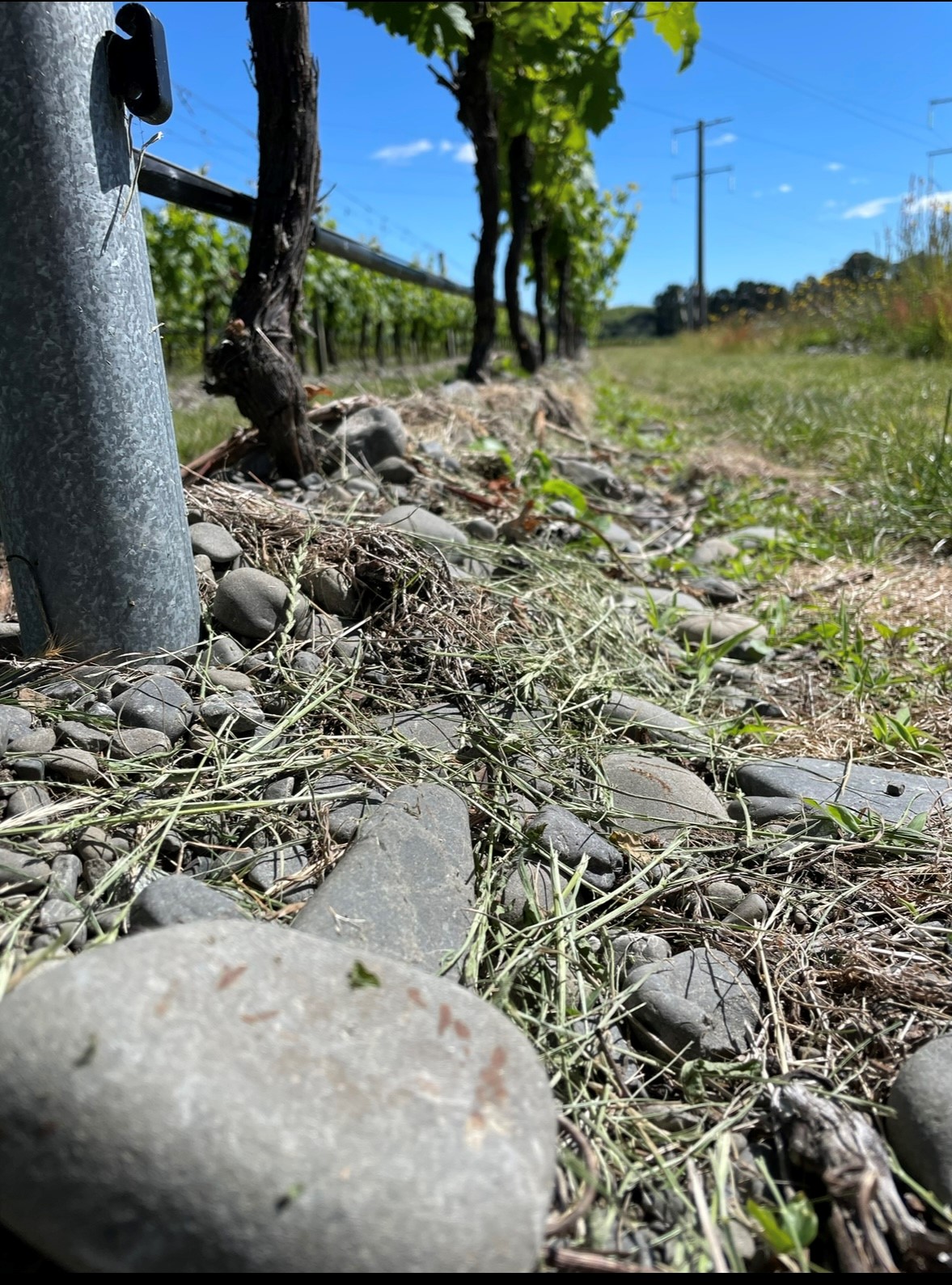 Plant matter left behind from recent sheep grazing, with this breaking down into the soil over the coming season, building soil organic carbon.
Using mechanical tillage to incorporate the cover crop into the midrow, disrupts soil structure and can lead to the release of carbon back into the atmosphere. No till is a highly recommend and practised within NZ as seen across the multiple vineyards visited and discussed. This also leads to an increase in soil health and overall plant and vineyard biodiversity while offering a high feed quality for sheep and a richer environment for biodiversity.
Changes are more likely to occur in the upper soil profile, so it might be necessary to wait several years following such a change in management to see variations within deeper soil layers while considering differing soil types and structures, further increasing carbon storage and its sequestration.
The results shown that a regenerative rotational grazing method within various Hawke’s Bay vineyards in New Zealand, does improve not only carbon sequestration and its storage but also nutrient development and use within the vineyards. Overall vine health and therefore wine grape quality also improves.
Grazing system’s that have been implemented for quite some time showed significantly higher grass production and root mass, leading to greater carbon storage within topsoil than conventional grazing. There were no significant differences between grazing systems/management when it came to nutrient cycling, although further study may show as such.
Various in person and online information sessions will be provided, showcasing the information and how you can apply these learnings to your enterprise. Feel free to reach out to Fil at fil.farina@elders.com.au for more information on this.
Fil was supported by the Great Wine Capitals Outbound Knowledge Exchange bursary program.
Photos: Fil Farina